Next Generation Data Analytics Platform
The Next Generation Data Analytics Platform will provide better integration, sharing, and collaboration of data. This website maps out the implementation of the new analytics platform.
Project Milestones
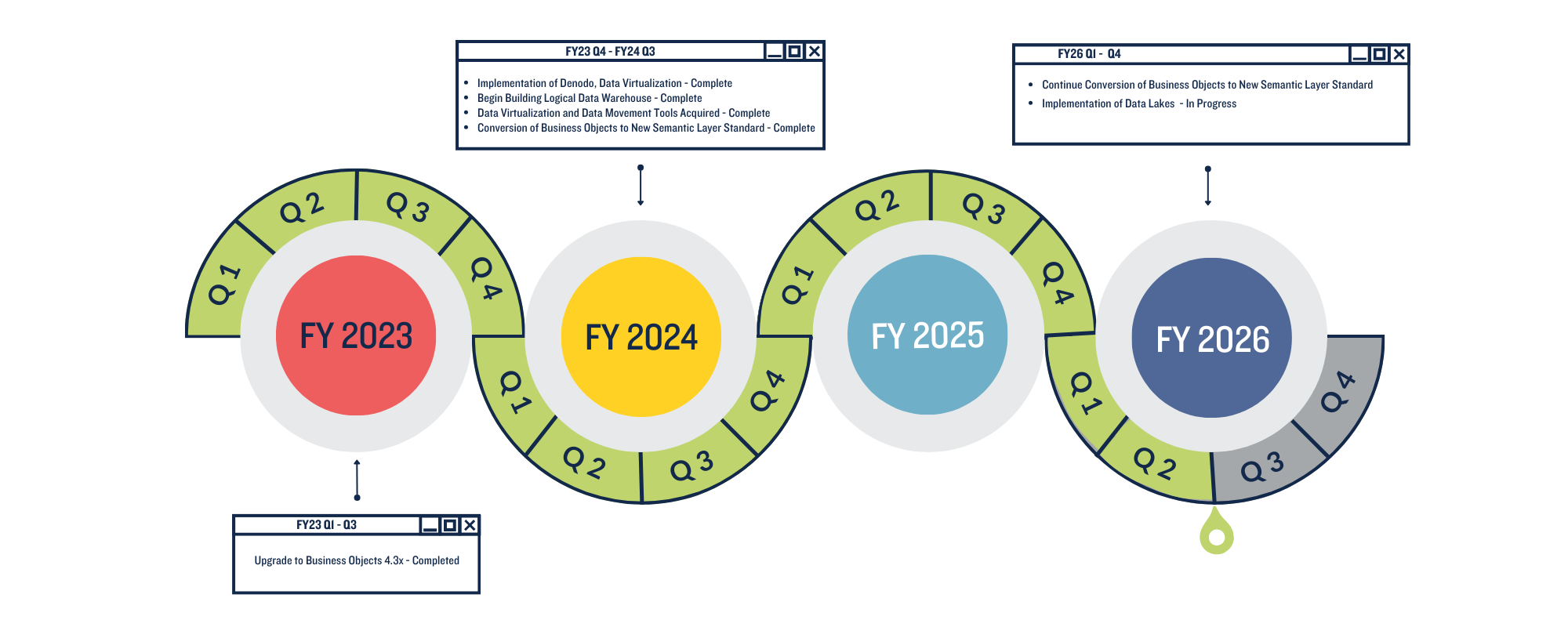
Data Analytics Platform News
Logical Data Warehouse
The Logical Data Warehouse (LDW) implementation is complete. Information on access can be found in the Logical Data Warehouse KnowledgeBase article.
Universe Conversions Are In Progress
More information is available on the Universe Conversions page.
New Data Integration Capabilities Using Data Virtualization with Denodo
The Denodo application is in production. More information is available on the Get Started - DataHub webpage.
New Enterprise Azure Data Lake Service with Microsoft Azure
Work continues to build and deploy the Enterprise Data Lake Service.
Enterprise Reporting
- We successfully upgraded SAP Business Objects to version 4.3 the weekend of March 25, 2023.
- Planning has started on the effort to migrate Business Objects Universes to a new format. This change is mandatory as the old format is being phased out. Building and refreshing reports in Web Intelligence will function the same. There will be some initial setup steps for existing reports. This new format provides new capabilities for supporting the reporting solutions provided in Business Objects.
Goals
Enable the University of Illinois System to become more data driven
Provide better integration and sharing of enterprise and unit data
Support more optimized data processing
New Analytics Platform
Data Delivery
Data delivery tools allow data analysts to interact with data to gain insights. Tools in the data delivery layer allow you to create, view, and share reports and data visualizations and perform data analysis. This layer also includes ad hoc reporting and standardardized reports.
Data Fabric – Logical Data Layer
The data fabric provides access to data and allows for advanced data integration. Access to physical data is available or data analysts can create virtual data sets. It allows for data integration, collaboration, and curation.
Physical Data Storage
Physical Data Storage is where the data is hosted. The modern physical data storage provides source data, data lineage, structured data for reporting, and unstructured data for analysis.
Next Generation Tools
Next Generation Tools
| Tool Type |
Current State |
Future State |
Future Hosting |
| Reporting |
SAP Business Objects 4.2 |
SAP Business Objects 4.3 |
On-Premise |
| Data Virtualization |
None |
Denodo |
On-Premise |
| Data Lake |
None |
Microsoft Azure |
Software as a Service |
| Data Movement |
Informatica Power Center |
Informatica Power Center with Denodo |
Software as a Service |